7 Essential Steps to Repot an Aloe Vera for Root Health
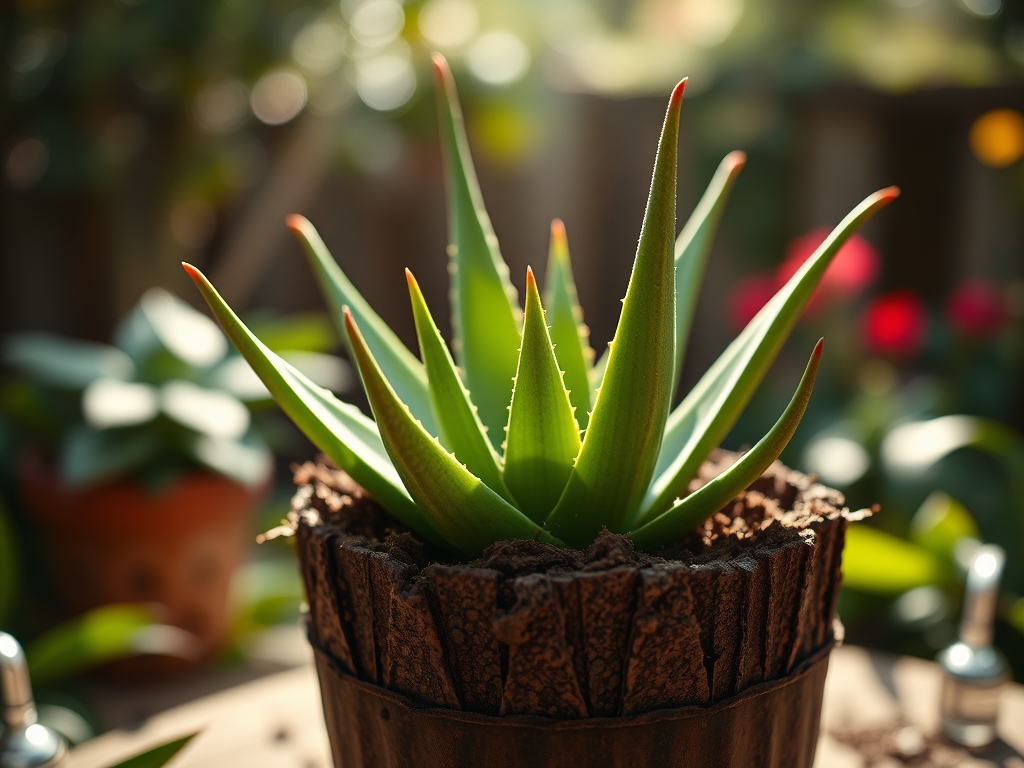
Aloe vera plants display characteristic signs when their roots have exhausted available soil nutrients and space. The lower leaves yellow and thin, offset production slows, and the plant tilts precariously in its container. Understanding the steps for repotting an aloe vera ensures the root system receives adequate drainage, fresh mineral content, and room for continued cation exchange capacity at the rhizosphere interface.
Materials and Soil Chemistry
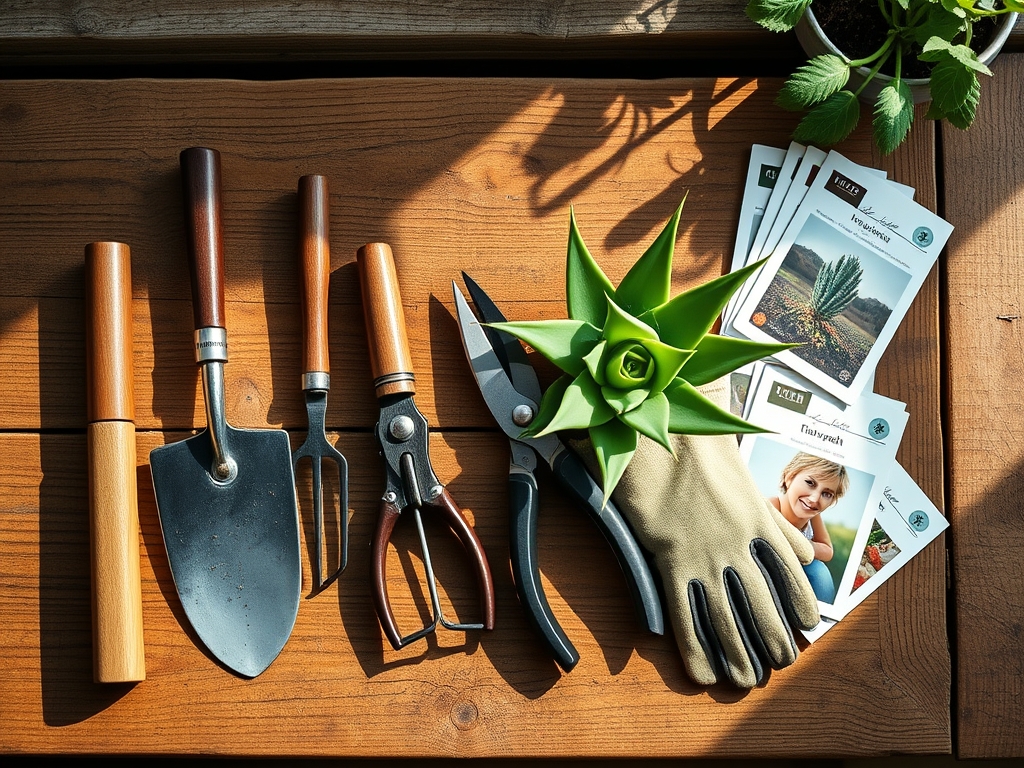
Select a terracotta or unglazed ceramic pot with drainage holes measuring 2 inches larger in diameter than the current container. Terracotta's porosity allows moisture evaporation through sidewalls, reducing anaerobic conditions at root surfaces.
Prepare a growing medium with pH 6.0 to 7.0. Combine equal parts coarse sand (2-5mm particle size), perlite, and commercial cactus mix. Avoid peat-based substrates with water retention above 40% by volume. Aloe vera evolved in arid regions where soil moisture dissipates rapidly after rainfall events.
Add 1 tablespoon of slow-release organic fertilizer rated 4-4-4 per gallon of soil mixture. This balanced NPK ratio supports moderate growth without triggering the soft, water-laden tissue that results from excess nitrogen. Incorporate mycorrhizal fungi inoculant at manufacturer-specified rates to colonize roots and extend phosphorus uptake capacity by 300% to 500% compared to non-mycorrhizal specimens.
Timing and Hardiness Zones
Aloe vera thrives in USDA Hardiness Zones 9 through 11 as an outdoor perennial. In Zones 3 through 8, grow specimens as container plants and move them indoors when nighttime temperatures approach 50°F. The optimal repotting window occurs in early spring, 4 to 6 weeks after the last expected frost date.
Root cell division accelerates when soil temperatures stabilize between 65°F and 75°F. Repotting during this metabolic peak allows severed root tips to initiate lateral branching within 7 to 10 days. Avoid repotting from late autumn through winter when auxin distribution shifts toward crown maintenance rather than root expansion.
Phases of Repotting
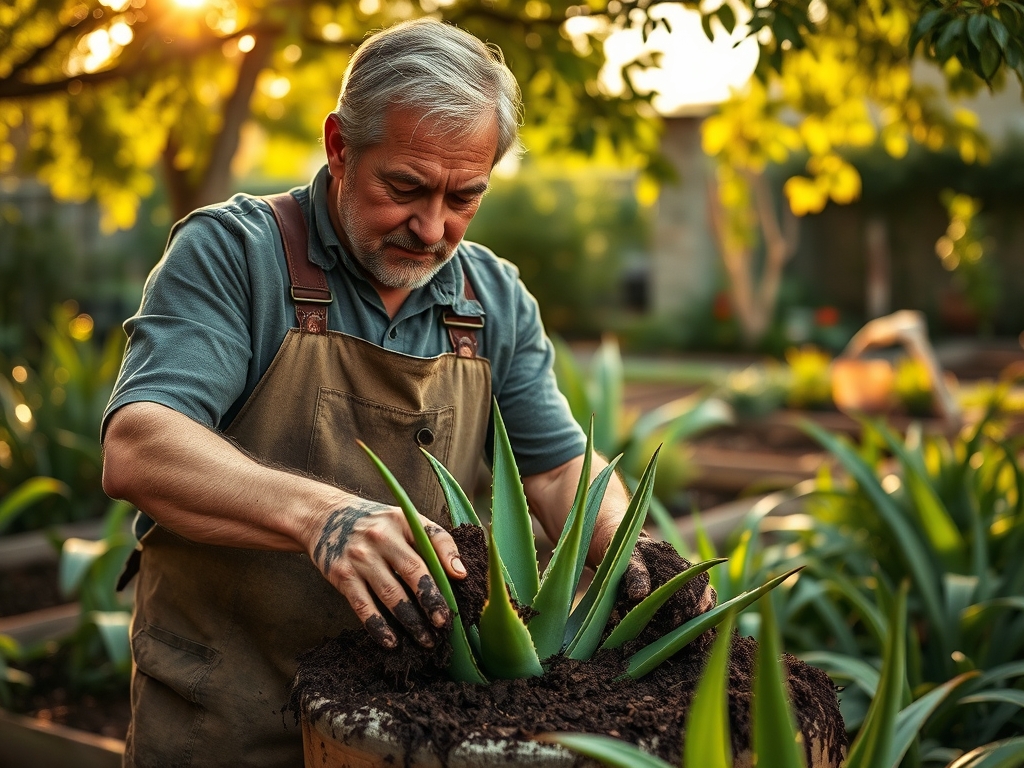
Step 1: Pre-Watering and Extraction
Water the aloe lightly 48 hours before repotting. This hydrates the root ball sufficiently for handling without saturating soil to the point of structural collapse. Tip the pot at a 45-degree angle and tap the rim against a work surface. Slide the root mass free. If roots have circled the container perimeter, they have entered a state of physiological restriction.
Pro-Tip: Use a sterile blade to score circling roots at four equidistant points, cutting 1/4 inch deep. This disrupts apical dominance in girdling roots and stimulates auxin redistribution toward outward growth vectors.
Step 2: Root Inspection and Sanitation
Examine roots for dark brown or black discoloration indicating Fusarium or Pythium infection. Healthy aloe roots appear pale tan to cream. Remove diseased tissue with pruning shears sterilized in 10% bleach solution (1 part household bleach to 9 parts water). Cut at a 30-degree angle 1/2 inch above visibly affected zones to ensure removal of all compromised vascular tissue.
Pro-Tip: Dust cut surfaces with sulfur powder or cinnamon to create a fungistatic barrier while wound periderm forms over the next 72 hours.
Step 3: Pot Preparation
Place a single layer of gravel or broken terracotta shards across the drainage hole. This prevents soil migration while maintaining water egress. Add 1 to 2 inches of prepared growing medium to establish the planting depth.
Step 4: Positioning and Backfilling
Center the aloe so the crown sits 1 inch below the pot rim. This elevation prevents water from pooling against the stem base, where epidermal cells lack the suberized protection found on root tissue. Fill gaps with soil mixture, tapping the pot periodically to eliminate air pockets that inhibit root-soil contact.
Pro-Tip: Leave the top 1/2 inch of major roots exposed for the first week. This allows visual monitoring of tissue turgor and early detection of rot symptoms before they ascend into crown tissue.
Step 5: Initial Watering Protocol
Wait 7 days before the first watering. This desiccation period allows cut root surfaces to suberize fully, creating a barrier against opportunistic pathogens present in even sterilized growing media. After the dormancy period, apply water until it emerges from drainage holes, then allow the top 2 inches of soil to dry completely before the next irrigation.
Step 6: Light Acclimatization
Place the repotted aloe in bright, indirect light for 2 weeks. Direct sun triggers stomatal opening and transpirational water loss before roots have established sufficient hydraulic conductivity. Gradually introduce direct morning sun over the following 10 days.
Step 7: Fertilization Schedule
Withhold supplemental fertilization for 6 weeks post-repotting. The slow-release 4-4-4 amendment provides adequate nutrition while new root hairs establish contact with soil particles. After the establishment period, apply diluted liquid fertilizer at 1/4 strength monthly during the growing season.
Troubleshooting Physiological Disorders
Symptom: Soft, translucent leaf bases with brown streaking.
Solution: Root rot from anaerobic soil conditions. Remove the plant, excise all affected roots, allow the crown to air-dry for 3 days, and replant in fresh, fast-draining medium.
Symptom: Leaf tips turn brown and papery.
Solution: Fluoride or chlorine toxicity from municipal water. Use rainwater or distilled water, or allow tap water to stand uncovered for 24 hours to dissipate chlorine.
Symptom: Offsetting ceases and leaves narrow.
Solution: Phosphorus deficiency. Apply bone meal at 2 tablespoons per gallon of soil or use liquid fertilizer with NPK ratio 5-10-5 at half strength.
Symptom: Purple-red leaf discoloration.
Solution: Excess light or cold stress. Relocate to filtered light and maintain ambient temperatures above 55°F.
Symptom: White cottony masses at leaf nodes.
Solution: Mealybug infestation. Apply 70% isopropyl alcohol directly to insects with a cotton swab, or spray with insecticidal soap rated for succulents.
Maintenance Parameters
Provide 6 to 8 hours of bright, indirect light daily. Water when the top 2 inches of soil register dry to the touch, typically every 14 to 21 days depending on humidity. Apply 1/2 cup of water per 6-inch pot, adjusting proportionally for container size.
Maintain daytime temperatures between 70°F and 80°F with nighttime temperatures 10 to 15 degrees cooler to mimic the plant's native diurnal temperature fluctuations. Feed monthly during spring and summer with liquid fertilizer diluted to 1/4 the label recommendation. Suspend fertilization from October through February when growth enters dormancy.
Frequently Asked Questions
How often should aloe vera be repotted?
Every 2 to 3 years or when roots emerge from drainage holes and the plant becomes top-heavy. Mature specimens exceeding 12 inches in diameter may remain in the same container for 5 years with annual top-dressing of fresh soil.
Can I repot aloe vera when it is flowering?
Avoid repotting during bloom. The process redirects carbohydrate resources from flower maintenance to root regeneration, causing premature flower abortion. Wait until the inflorescence senesces naturally.
What pot size prevents root binding?
Choose containers 2 inches larger in diameter than the root mass. Excessive pot volume retains moisture longer than aloe roots can absorb it, creating conditions favorable for Pythium and Phytophthora colonization.
Should I remove offsets during repotting?
Yes. Separate offsets with at least three fully developed leaves and independent root systems. This reduces competition for nutrients and allows the parent plant to allocate resources toward crown expansion rather than offset support.
Why do leaves droop after repotting?
Temporary wilting results from severed root hairs that previously maintained hydraulic conductivity. Turgor pressure recovers within 10 to 14 days as new root hairs establish contact with soil particles and resume water absorption.